Can you safely use regular mulch for a playground, or should you choose a different surface?

Can I Use Regular Mulch For A Playground?
You’re asking an important safety and practical question that many caregivers, homeowners, and community managers face. This section gives a high-level answer: sometimes, but usually with major caveats — and oftentimes a purpose-made playground surfacing product is a better choice.
What people mean by “regular mulch”
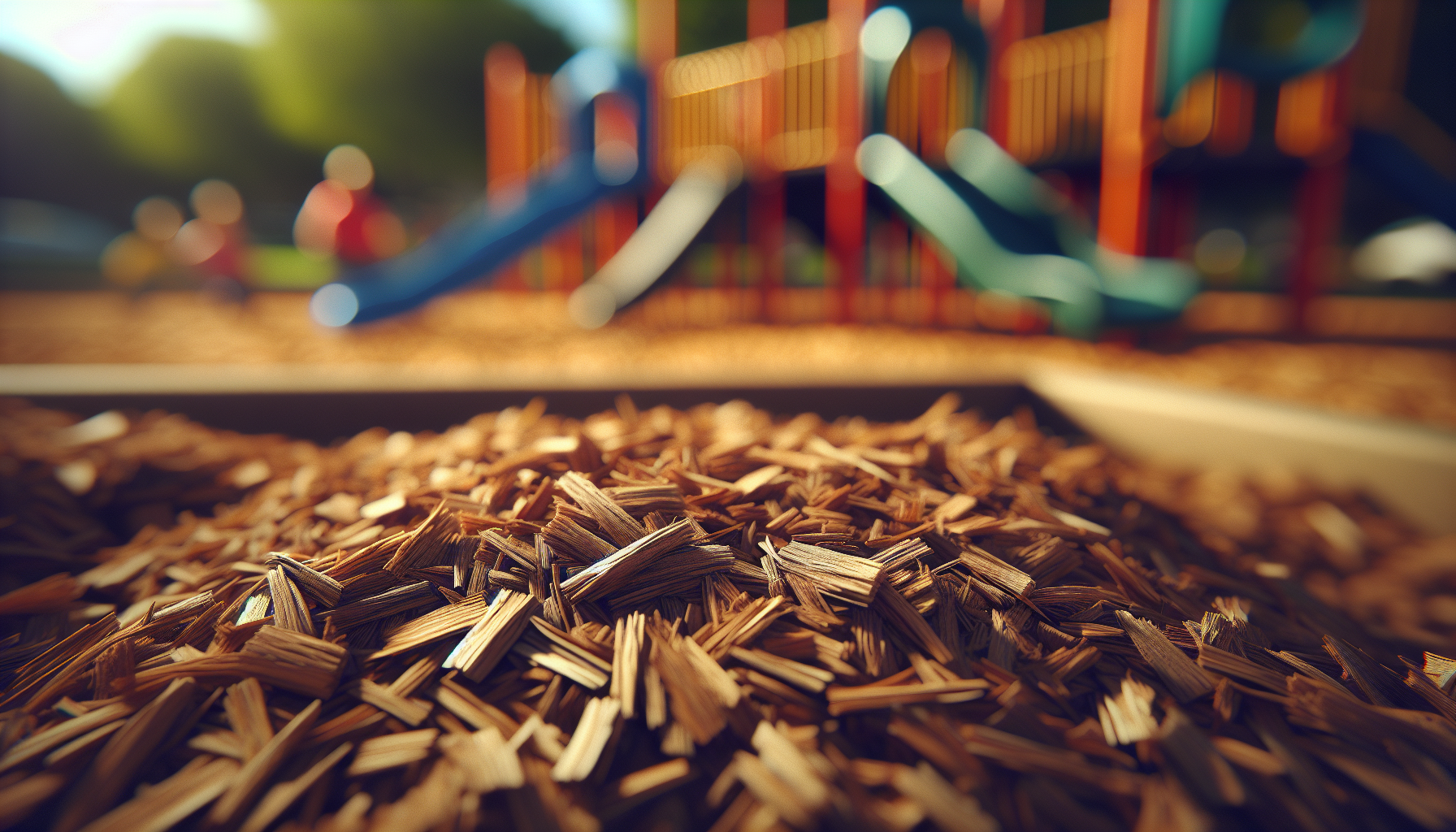
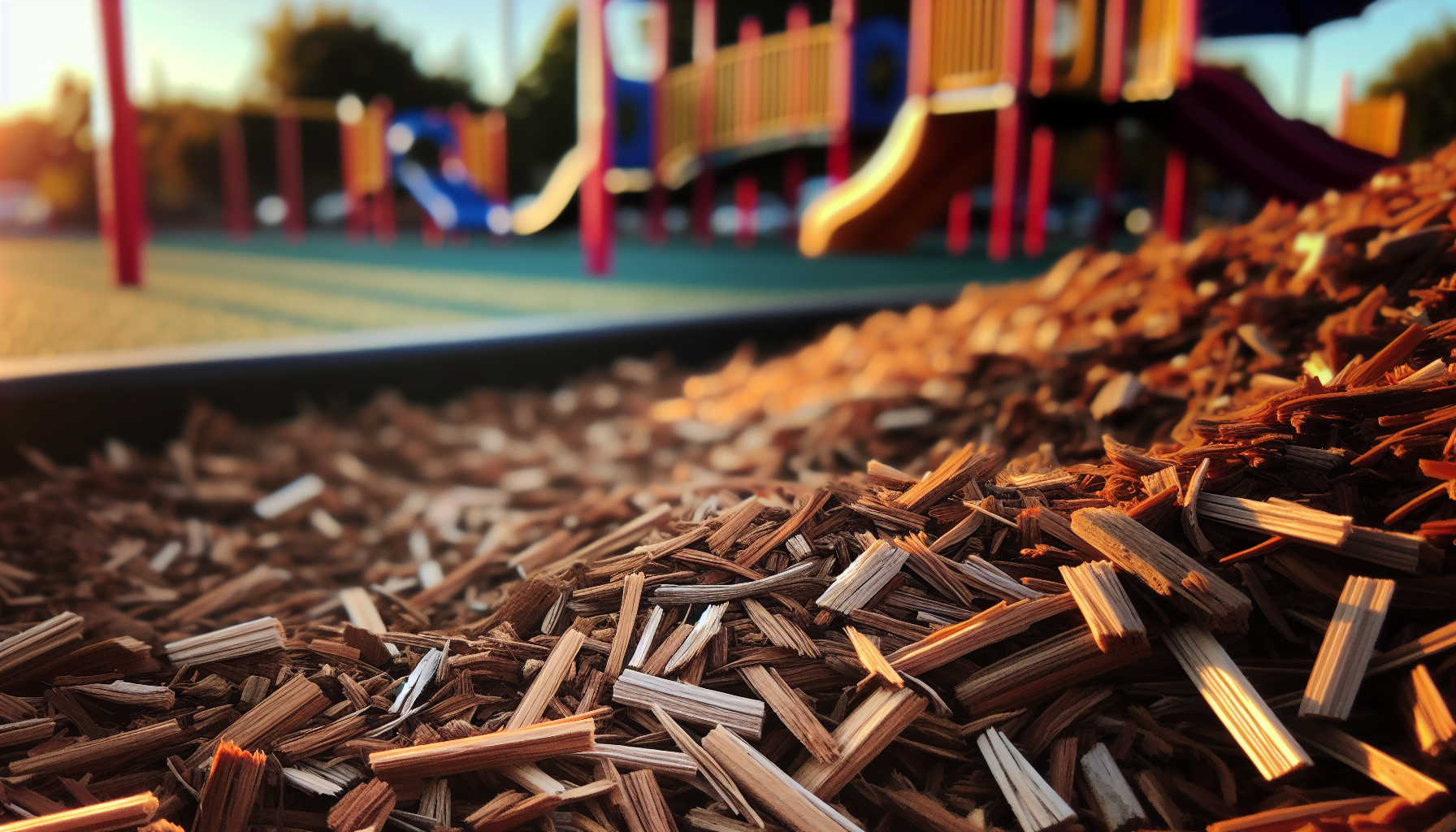
When people say “regular mulch,” they usually mean landscape mulch you buy at garden centers: shredded bark, wood chips, colored decorative mulch, or composted organic material. You’ll want to know exactly what kind of mulch you’re considering because not all mulches behave the same underfoot or on impact.
Common types of garden mulch
These are common varieties you’ll find at landscape suppliers and big-box stores. Each one has characteristics that affect safety, durability, and maintenance.
- Shredded bark: Soft to walk on but breaks down faster.
- Wood chips (coarse): Cheaper, sturdier, but can be uneven and may hide hazards.
- Colored/dyed mulch: Aesthetic, but dyes and additives may be a concern for children.
- Compost/leaf mulch: Very fine, tends to compact and form mud when wet.
How playground-specific surfacing differs from garden mulch
Playground surfacing is engineered to provide impact attenuation, consistent compaction, and predictable performance after weathering. Regular garden mulch is not produced to meet those same safety standards.
Engineered wood fiber (EWF) vs. garden mulch
EWF is manufactured to specific particle sizes and looseness to absorb impact. Garden mulch is made for moisture retention and weed suppression, not for cushioning falls. If you’re comparing the two, you’ll note that EWF has testing and installation guidance tied to fall heights and safety standards, whereas garden mulch does not.

Safety standards you should know about
When you’re responsible for a play area, safety standards matter. You should be familiar with a few core documents and tests that determine whether a surfacing option is acceptable.
Key standards and guidelines
- CPSC Public Playground Safety Handbook: Gives guidance for playground surfacing and recommended depths, and stresses that surfacing should reduce the severity of head injuries.
- ASTM F1292: The standard test method for impact attenuation of playground surfaces; it defines the critical fall height a surface can protect.
- ASTM F1951: Provides guidance on accessibility testing (wheelchair access) for playground surfacing.
You’ll want surfacing that meets ASTM/CPSC guidance for the equipment’s critical fall heights and that is as accessible as law or policy requires.
Can regular mulch meet these standards?
In general, garden mulch doesn’t come with laboratory-tested impact attenuation ratings tied to ASTM F1292. That doesn’t mean it’s impossible for some mulch to perform adequately for low fall heights, but it does mean you can’t rely on it to meet recognized standards without testing.
Factors that determine whether a mulch can protect against falls
- Material type and particle size
- Consistency (mix of fines vs. coarse pieces)
- Depth and how often it’s maintained/topped up
- Compaction over time and moisture content
- Presence of rocks, roots, or other hard objects beneath mulch
If you consider regular mulch, you’ll need to evaluate these variables and accept higher uncertainty than with playground-specific materials.
Risks of using regular (garden) mulch
There are several safety and practical issues you need to consider before placing garden mulch in an area where children play.
Impact attenuation uncertainty
Regular mulch is not produced with consistent particle size or resilience. Over time, it compacts, becomes uneven, and may not provide sufficient energy absorption during a fall. That raises the risk of serious injury.
Contaminants and chemical concerns
Colored or treated mulch sometimes contains dyes, kiln additives, or residual chemicals. Young children put hands and toys in mouths, so you want to minimize exposure to potentially harmful substances.
Biological hazards
Organic mulch can attract insects, rodents, and mold. It may also foster fungal growth that could cause allergic reactions or respiratory irritation in sensitive children.
Splinters and sharp fragments
Coarse wood chips can produce sharp pieces that injure bare feet or hands. Garden mulch may also hide nails, glass, or small stones if you’re repurposing material.
Drainage and mud
Fine mulch or compost will compact and form mud where children run, creating slipping hazards and a mess. That’s especially a problem in climates with significant rainfall.
Pros of using regular mulch
You might still be considering garden mulch because it has some advantages. Be realistic about where it makes sense and where it doesn’t.
Cost and availability
Regular mulch is often the cheapest and easiest-to-find option. If you need to cover a large area fast and have a very limited budget, mulch is tempting.
Aesthetics and biodegradability
Mulch can look pleasant and natural, and it breaks down over time, returning organic material to your soil.
Easy to replenish
You can add more mulch as needed from many local suppliers, and you can compost or recycle it when it’s time to replace.
Alternatives to regular mulch you should consider
There are better choices designed for playground safety and performance. You should evaluate these based on fall height, maintenance capacity, accessibility needs, and budget.
Engineered Wood Fiber (EWF)
EWF is the closest in look and feel to garden mulch but is processed and graded specifically for playground impact attenuation. It’s often the preferred loose-fill option for municipal and school playgrounds.
- Pros: Better tested for impact, still relatively low cost, natural appearance.
- Cons: Requires frequent raking and top-ups, not ADA accessible unless installed with a stabilizing mat or perimeter.
Rubber mulch (recycled rubber chips)
Made from shredded recycled tires, rubber mulch provides excellent impact attenuation and doesn’t decompose the way organic mulch does.
- Pros: Durable, low maintenance, better shock absorption.
- Cons: Higher initial cost, heat retention in hot weather, potential chemical odor, not always considered eco-friendly by all communities.
Poured-in-place rubber or bonded rubber surfacing
This is a poured surface that gives uniform impact protection and is ADA-compliant.
- Pros: Durable, accessible, low maintenance after installation.
- Cons: High initial cost, can be hot in sun, requires professional installation.
Rubber tiles or mats
Interlocking tiles or rubber mats offer consistent protection and wheelchair accessibility.
- Pros: Accessible, immediate uniform coverage.
- Cons: Costly upfront, may require periodic lifting/repair, can be hard under heavy play surfaces.
Sand and pea gravel
These are traditional loose-fill surfaces.
- Pros: Cheap, easy to top up.
- Cons: Not ideal for protective cushioning for larger fall heights, can be scattered, pose choking risk for very young children, and are not wheelchair accessible.
Artificial turf with shock pad
Turf systems with shock-absorbing pads can be a durable and accessible option that looks neat.
- Pros: Low maintenance, attractive, accessible if designed correctly.
- Cons: Higher cost and potential heat retention.
Table: Quick comparison of surfacing options
This table gives you a snapshot so you can quickly weigh options by common concerns.
| Surface type | Impact performance | Accessibility | Maintenance | Typical cost (installed) | Lifespan |
|---|---|---|---|---|---|
| Regular garden mulch | Variable — often unknown | Poor | High (raking, topping) | Low | Short (1–3 yrs) |
| Engineered wood fiber (EWF) | Good when installed to spec | Needs matrix or mat for ADA | High (top-up) | Low–Moderate | Moderate (3–7 yrs) |
| Rubber mulch | Good | Variable (not inherently ADA) | Low–Moderate | Moderate–High | Long (7–15 yrs) |
| Poured-in-place rubber | Very good | Excellent | Low | High | Long (10–20+ yrs) |
| Rubber tiles/mats | Very good | Excellent | Moderate | High | Long (10–20 yrs) |
| Sand/pea gravel | Poor–Moderate | Poor | High (cleanup) | Low | Moderate |
| Artificial turf + pad | Good | Excellent | Low–Moderate | High | Long (8–15 yrs) |
Note: Cost and lifespan ranges are approximate and vary by region, installer, and product quality. Always get local quotes and product specs.
How to evaluate regular mulch if you’re still considering it
If budget or availability forces you to consider regular mulch, you should evaluate the specific product carefully before use.
What to ask your supplier
- Is this mulch dyed or treated?
- What is the particle size range and composition?
- Is it free of rocks, glass, and contaminants?
- Can you get a Material Safety Data Sheet or ingredient list?
Field checks you can do
- Inspect for sharp objects or construction debris.
- Squeeze a handful — is it damp/compacted or loose and springy?
- Check for visible mold, rodent droppings, or large fragments.
- Test how it behaves when dropped on a hard object (informal, not a substitute for ASTM testing): if it compacts flat, it likely won’t cushion well.
How deep should you put mulch or EWF under playground equipment?
Depth is critical because thickness is directly tied to the level of protection you’ll get. For engineered products, manufacturer guidelines and ASTM recommendations should be followed.
General guidance
- For low fall heights (under about 3 feet), shallower loose-fill may be acceptable.
- For moderate fall heights (4–8 feet), depths in the range of 6–12 inches are commonly recommended for loose-fill surfaces like EWF.
- For higher fall heights (above 8 feet), you often need more specialized surfacing or greater depths; always check product-specific critical fall height charts.
You should never guess depth; measure after compaction and account for expected settlement over time. Loose-fill materials typically compact by 20–30% with use and weathering.
Installation steps if you use a loose-fill product (EWF or mulch)
If you choose a loose-fill material, follow careful installation to maximize safety and longevity.
Preparation
- Clear the play area of rocks, roots, and debris.
- Build a perimeter edging to contain the surfacing.
- Improve drainage if pooling water is likely.
- Optionally install a geotextile fabric to reduce mixing with soil (note: some specs discourage fabric under EWF unless designed to work with it because it can impede drainage or anchor the fibers).
Spreading and grading
- Deliver material to the area and spread to the required depth, accounting for compaction.
- Use a rake to create even coverage; avoid large clumps.
- Ensure 12–18 inches beyond equipment footprint are covered to allow for runout zones.
Measurement and certification
- Measure depth in multiple places after compaction. Use a ruler or depth gauge.
- If the playground is public or required by policy to meet ASTM standards, have a certified test performed or use manufacturer tables to ensure the depth matches the critical fall height needed.
Maintenance you must plan for
Loose-fill surfaces require ongoing work to keep them safe.
Routine tasks
- Inspect weekly for foreign objects and damage.
- Rake to maintain even distribution and aeration.
- Top up loose-fill as it compacts or gets displaced — keep records of top-ups and when applied.
- Replace full depth every few years, depending on wear and decomposition.
Seasonal considerations
- In wet climates, expect heavier compaction and potential mold issues.
- In freezing climates, frozen mulch becomes hard and loses shock-absorbing capacity; consider seasonal closures or alternative surfaces.
Accessibility and legal requirements
You need to account for ADA or local code requirements if your playground is public or meant for community use.
Loose-fill and wheelchair access
Loose-fill surfaces are often inaccessible to wheelchairs and some mobility devices unless paired with accessible routes, stabilized surfacing, or poured-in-place elements. ASTM F1951 can be used to test accessibility.
Liability and inspections
Public playgrounds often require regular documented inspections and adherence to standards. If you’re responsible for a school or municipal playground, using non-standard garden mulch could raise liability concerns.
Cost considerations and budgeting
You’ll want to balance safety, durability, and budget. Short-term savings from using regular mulch can be erased by higher maintenance, more frequent replacement, and increased injury risk.
Typical budget factors
- Material cost per cubic yard or per pallet
- Delivery and spreading labor
- Edging and substrate preparation
- Ongoing maintenance and top-up schedule
- Replacement schedule and disposal costs
You should build a lifecycle cost estimate, not just upfront expense, when making a choice.
Environmental and sustainability factors
You might prefer biodegradable or recycled materials; both have trade-offs.
Organic mulch benefits and drawbacks
Organic mulch breaks down and returns nutrients to soil but requires frequent replacement. It may also release dust or fines into stormwater.
Recycled rubber considerations
Recycled rubber keeps tires out of landfills and is long-lasting, but there’s debate about chemical leaching and microplastics over time. Check local regulations and product certifications.
Fire hazard and heat
In hot climates or near ignition sources, some mulches can be a fire risk or retain heat that makes the surface uncomfortable.
Things to consider
- Rubber surfaces retain heat more than wood fibers.
- Some mulches can smolder if a cigarette or ember is introduced.
- Keep open flames and grills away from play areas and monitor local fire safety guidance.
If you already have garden mulch under play equipment
If you discover garden mulch beneath your swings or slides, you should assess risk and plan remediation.
Short-term fixes
- Remove and replace with a tested playground material if possible.
- At minimum, ensure depth is generous, remove hazardous debris, and block access to high-fall zones until a proper surfacing is installed.
Long-term plan
- Transition to EWF, rubber mulch, poured-in-place, or mats based on your budget, maintenance capacity, and accessibility needs.
- Keep records of inspections and any incidents.
What to avoid
Certain mulch choices are clear no-nos in playground contexts.
Avoid dyed and colored mulches underplay equipment
These are meant for landscaping aesthetics and may contain dyes or additives not tested for child contact or ingestion.
Avoid very fine compost or leaf mulch
Finer materials compact and cake, losing shock-absorbing properties quickly and becoming a mud hazard.
Avoid reusing mulch salvaged from construction sites
That can contain nails, screws, glass, or chemical residues.
When regular mulch might be acceptable
There are limited scenarios where garden mulch could be used safely.
Low-use, very low-fall areas
If the play area is for toddlers, with equipment under 2–3 feet of fall height, and you ensure the mulch is clean, untinted, and frequently maintained, you might accept garden mulch as a temporary or interim surface. Even then, consider EWF as the safer alternative.
Decorative peripheral areas
Using garden mulch outside the primary fall zones — e.g., in seating areas or garden beds bordering the playground — is generally fine as long as it’s not the primary shock-absorbing surface.
Decision checklist for you
Use this checklist to make a deliberate choice rather than an impulsive one.
- What is the maximum equipment fall height?
- Does the material have documented impact attenuation data?
- Is the material free from dyes, contaminants, and large fragments?
- Can you commit to the maintenance regime needed for loose-fill?
- Do you need ADA-compliant surfacing?
- What is your long-term budget for replacement and upkeep?
- Are you responsible for public safety under local regulations?
If you can’t answer these confidently, err on the side of using a product made for playground safety.
Sample installation and maintenance schedule
Here’s an example plan you can adapt to your local climate and usage:
- Monthly: Quick visual inspection, remove foreign objects, rake high-traffic areas.
- Quarterly: Check depth in several locations; top up where depth is below recommended level.
- Annually: Full inspection for decomposition, contamination, and depth consistency; consider partial replacement.
- Every 3–7 years: Full replacement of loose-fill organic surface depending on wear and decomposition.
Adjust frequency for heavy use or for climates with heavy precipitation.
How to test or certify playground surfacing
If you need to demonstrate compliance, you can have ASTM F1292 testing done for impact attenuation and ASTM F1951 for accessibility. Certified labs can perform tests, and some manufacturers provide lab data for their products.
DIY and professional options
- DIY: Measure depth, perform visual inspections, and keep records. This helps but does not replace lab testing.
- Professional: Hire a playground safety inspector or testing lab for formal certification if you manage a public space.
FAQs you might have
Here are short answers to common follow-ups you might consider.
- Is dyed mulch toxic to children? It depends on product chemistry; avoid dyed mulch in play areas unless you have safety documentation.
- Can I mix regular mulch with EWF to save money? Mixing usually voids manufacturer guidance and can reduce safety performance; it’s not recommended.
- How often will I need to top up loose-fill mulch? Typically annually or more often in high-traffic zones; plan for 1–2 inches per year loss depending on use and weather.
- Does mulch attract insects? Yes, organic mulches can attract beetles, ants, and other insects; regular inspection and hygiene reduce issues.
Final recommendations for you
- Prefer engineered or certified playground surfacing for primary fall zones whenever possible. It gives you predictable performance, better documentation for safety, and usually lower liability risk.
- If budget forces temporary use of regular mulch, choose clean, untreated, coarse wood mulch (not fine compost or dyed options), install thickly, inspect and maintain frequently, and plan to replace it with engineered surfacing as soon as feasible.
- Always account for accessibility and local codes. If this is a public playground or school, prioritize materials that meet ASTM and ADA guidelines.
- Keep records: inspections, top-ups, incidents. Proper documentation helps you stay accountable and manage maintenance.
If you want, you can tell me: what specific mulch product you’re considering, the equipment fall heights in your play area, and whether the playground is for private home use or public/community use — and I’ll help you assess if that mulch is appropriate and what depth and maintenance plan you’d need.