Can you use regular mulch for a playground?
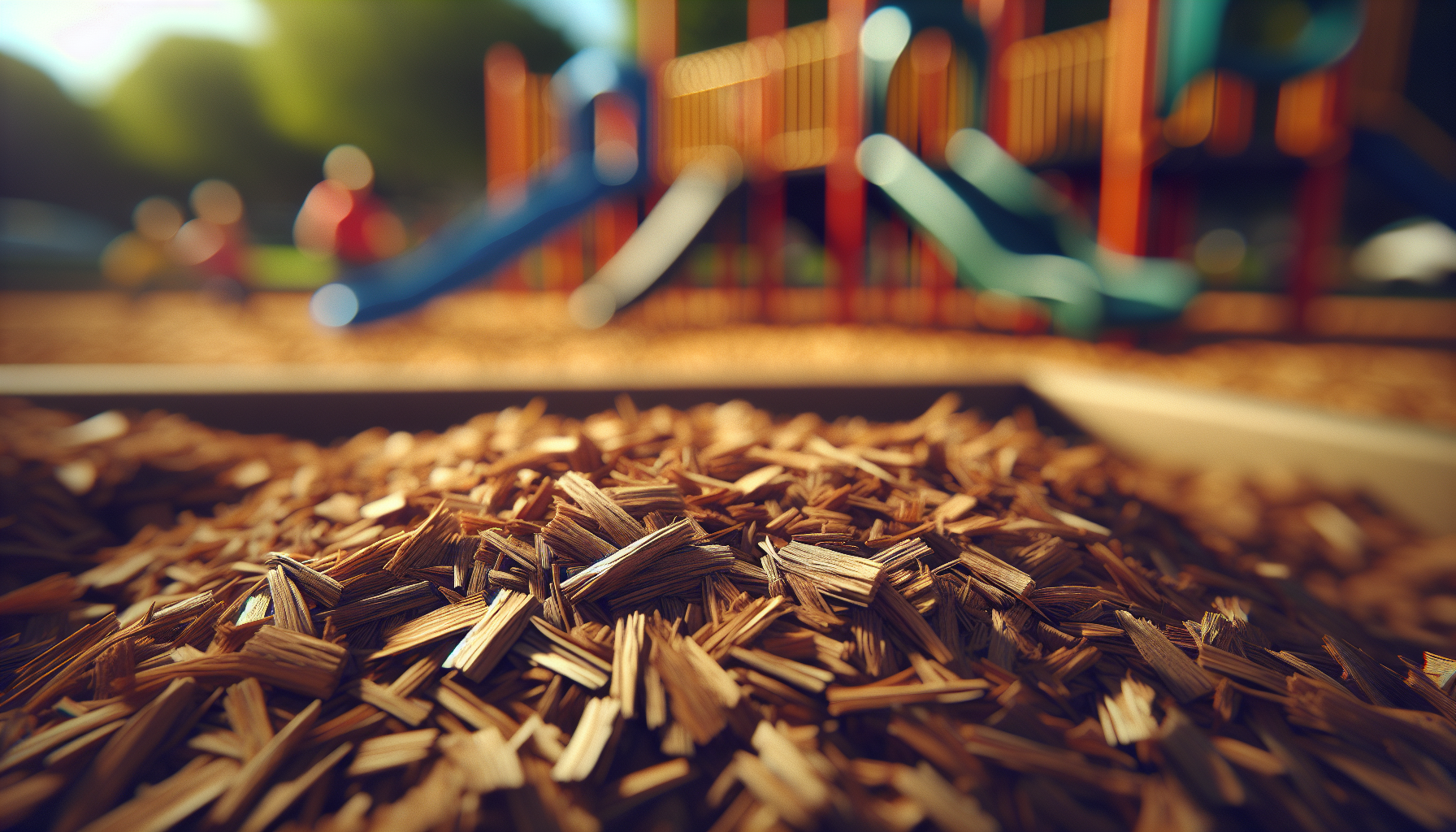

Can I Use Regular Mulch For A Playground?
You probably want a safe, attractive, and cost-effective surface for your playground, and mulch might look like a straightforward choice. This article walks you through what “regular mulch” means, how it compares to playground-grade surfaces, safety considerations, installation and maintenance steps, legal and accessibility issues, costs, and recommended alternatives. By the end, you’ll be able to decide whether regular mulch meets your needs and how to use it safely if you choose to.
What people mean by “regular mulch”
When people say “regular mulch,” they usually mean common landscape mulch sold for gardens and flowerbeds: shredded bark, wood chips, composted wood, or dyed decorative mulch. These products are designed to conserve moisture, suppress weeds, and improve soil aesthetics—not to absorb impacts from falls.
Because these mulches vary widely in particle size, uniformity, and durability, they behave differently when used as playground surfacing. Some are too coarse, break down quickly, or compact and lose cushioning. Others may contain contaminants or dyes that you wouldn’t want children exposed to.
Key safety standards and guidelines
You should rely on recognized safety standards and guidance when selecting a playground surface. These requirements exist to reduce head and body injuries from falls.
Most relevant standards and guidance
- ASTM F1292 — Standard Test Method for Impact Attenuation of Surfacing Materials Within the Use Zone of Playground Equipment. This tests whether a surfacing material reduces the force of impact to an acceptable level.
- ASTM F1951 — Standard Specification for Determination of Accessibility of Surface Systems Under and Around Playground Equipment. This indicates if a surface supports wheelchair access.
- CPSC Public Playground Safety Handbook — U.S. Consumer Product Safety Commission guidance that outlines recommended surfacing types, depths, and maintenance practices.
- Local building codes and school district or municipal regulations — these can add requirements for public or institutional playgrounds.
If a surfacing product is “engineered” and certified to meet these standards (often shown as IPEMA or manufacturer test reports), you can be more confident in its safety performance.
What the standards mean for you
If you’re responsible for safety, you should select a surfacing system that has been tested and documented to meet impact attenuation requirements for the maximum fall height on your equipment. Loose landscape mulch rarely comes with such certification, while engineered wood fiber and poured-in-place rubber often do.

Types of mulch and how they perform
Not all mulches are created equal. Below is a summary of common types you might be considering and how they typically fare when used under playground equipment.
| Mulch Type | Typical composition | Cushioning performance | Durability & maintenance | Safety concerns |
|---|---|---|---|---|
| Shredded bark (landscape mulch) | Bark pieces, variable size | Inconsistent; can compact quickly, poor impact attenuation for higher fall heights | Breaks down, requires frequent top-up | Splinters, potential composting heat, pests |
| Wood chips (coarse) | Larger wood pieces from chipping | Better initial cushion but can shift and create hard spots | Long-lasting but uneven; periodic raking | Tripping, splinters, hidden debris |
| Composted mulch | Finer, organic matter | Poor cushioning due to compaction | Rapid decomposition, high maintenance | Mold, bacterial growth, odor |
| Dyed decorative mulch | Wood with pigments | Similar to shredded bark; dyes may introduce chemicals | Similar to bark mulch | Possible chemical exposure; avoid in play area |
| Engineered wood fiber (EWF) | Processed to uniform size and shape | Designed to meet ASTM requirements when installed to correct depth | Acceptable longevity with maintenance | Requires professional-installed depth; may still splinter |
| Rubber mulch (ground recycled rubber) | Shredded rubber pieces | High cushioning; retains performance over time | Low maintenance; does not decompose | Heat retention, off-gassing concerns, cost |
| Poured-in-place rubber & rubber tiles | Binder + rubber granules | Engineered to meet ASTM; predictable CFH | Durable, low maintenance | Higher cost; heat retention |
EWF is a special product produced to meet playground impact standards. Regular landscape mulch is generally not produced to those specifications.
Impact attenuation and fall height
One of the most important considerations is the critical fall height (CFH) — the maximum height from which a child can fall onto the surface without sustaining a life-threatening head or neck injury. To be compliant, the surfacing system must have an impact attenuation rating that corresponds to the highest play surface height.
Typical guidance on depth for loose-fill materials
Loose-fill materials must be installed and maintained to a specified depth to achieve the tested CFH. Depths vary by material type and product. Below are approximate, commonly cited depth ranges for loose-fill surfacing materials—but you must confirm with product documentation or testing before relying on them for safety.
| Material | Typical recommended loose depth (approx.) | Typical maximum CFH range (approx.) |
|---|---|---|
| Engineered wood fiber (EWF) | 8–12+ inches depending on equipment height | Up to 7–10 ft depending on depth and product certification |
| Wood chips / shredded bark (unengineered) | 6–12 inches (performance inconsistent) | Often lower than EWF; unreliable for higher fall heights |
| Rubber mulch | 3–6 inches | Can meet higher CFH with less depth; product-specific |
| Sand/pea gravel | 9–12 inches | Lower CFH due to compaction and potential for hardening |
Important caveat: These numbers are general. Impact attenuation depends on particle size, uniformity, moisture, compaction, and maintenance. Only materials tested to ASTM F1292 and installed to manufacturer-specified depths should be relied on for specific CFH performance.
Is regular mulch acceptable for your playground?
Short answer: maybe for very low-risk, low-height residential play areas — but not recommended for public, school, or any playground where children can fall from heights that require certified surfacing.
Longer explanation:
- If your playground equipment has low platforms (under a couple of feet) and the use is strictly private and supervised, landscape mulch may be acceptable provided you maintain sufficient depth and watch for hazards.
- For commercial, public, school, or daycare playgrounds, you should choose a surfacing system tested and documented to meet applicable standards. Regular landscape mulch rarely has such documentation.
- EWF (engineered wood fiber) that is certified is often the wood-based surface you want. It looks similar to wood mulch but is produced and graded specifically for playgrounds.
Health, environmental, and maintenance concerns with regular mulch
You also want to think beyond impact attenuation. Regular mulch brings other factors that matter to children’s health and the longevity of the surface.
Splinters and sharp pieces
Coarse wood chips and chipped wood sometimes contain sharp edges and nails if recycling from construction wood is used. Children can get splinters and scrapes, and buried debris can create puncture hazards.
Mold, fungi, and allergens
Organic mulches retain moisture and can support mold and fungal growth. This can increase allergic reactions in sensitive children, and decomposing mulch can sometimes emit odors or attract insects.
Dyes and chemicals
Dyed decorative mulch may contain pigments and treatments that are not intended for prolonged contact by children. Avoid dyed and chemically treated mulches in play areas.
Insects and rodents
Organic mulch sometimes attracts insects, ants, and rodents, which can be a nuisance and a health concern.
Drainage and compaction
Mulch that compacts or gets muddy can lose cushioning ability. Poor drainage beneath the mulch can accelerate decomposition and create hard zones.
Environmental impact
Using untreated, locally-sourced wood often has lower environmental impact. Recycled rubber reduces landfill waste but raises concerns about heat and chemical exposure. Consider lifecycle, disposal, and sourcing.
Accessibility: ADA considerations
If you must comply with accessibility laws or want universal access, keep in mind that loose-fill materials like regular mulch are not ADA-compliant for routes under and to play equipment unless special measures are taken.
- ASTM F1951 addresses accessibility. Loose-fill surfaces often require an accessible route of stable, firm, and slip-resistant material to the play area and to transfer stations.
- Alternatives such as poured-in-place rubber or firm rubber tiles provide accessible surfaces.
- If you use loose-fill mulch, you should provide accessible routes and consider accessible play components.
Cost considerations
Costs vary widely by region, availability, and type. Here are ballpark comparisons per cubic yard or per square foot.
| Surface type | Typical installed cost (approx.) |
|---|---|
| Regular landscape mulch | $10–$30 per cubic yard (materials only); installed cost varies |
| Engineered wood fiber (EWF) | $25–$60 per cubic yard (including installation and compaction) |
| Rubber mulch | $50–$150 per cubic yard (includes install) |
| Poured-in-place rubber | $8–$15 per sq. ft. installed |
| Rubber tiles | $6–$20 per sq. ft. installed |
| Sand/pea gravel | $25–$50 per cubic yard |
Remember to factor maintenance costs: regular mulch requires frequent replenishment and raking; EWF requires topping up less frequently; poured-in-place and tiles are more expensive up front but lower maintenance over time.
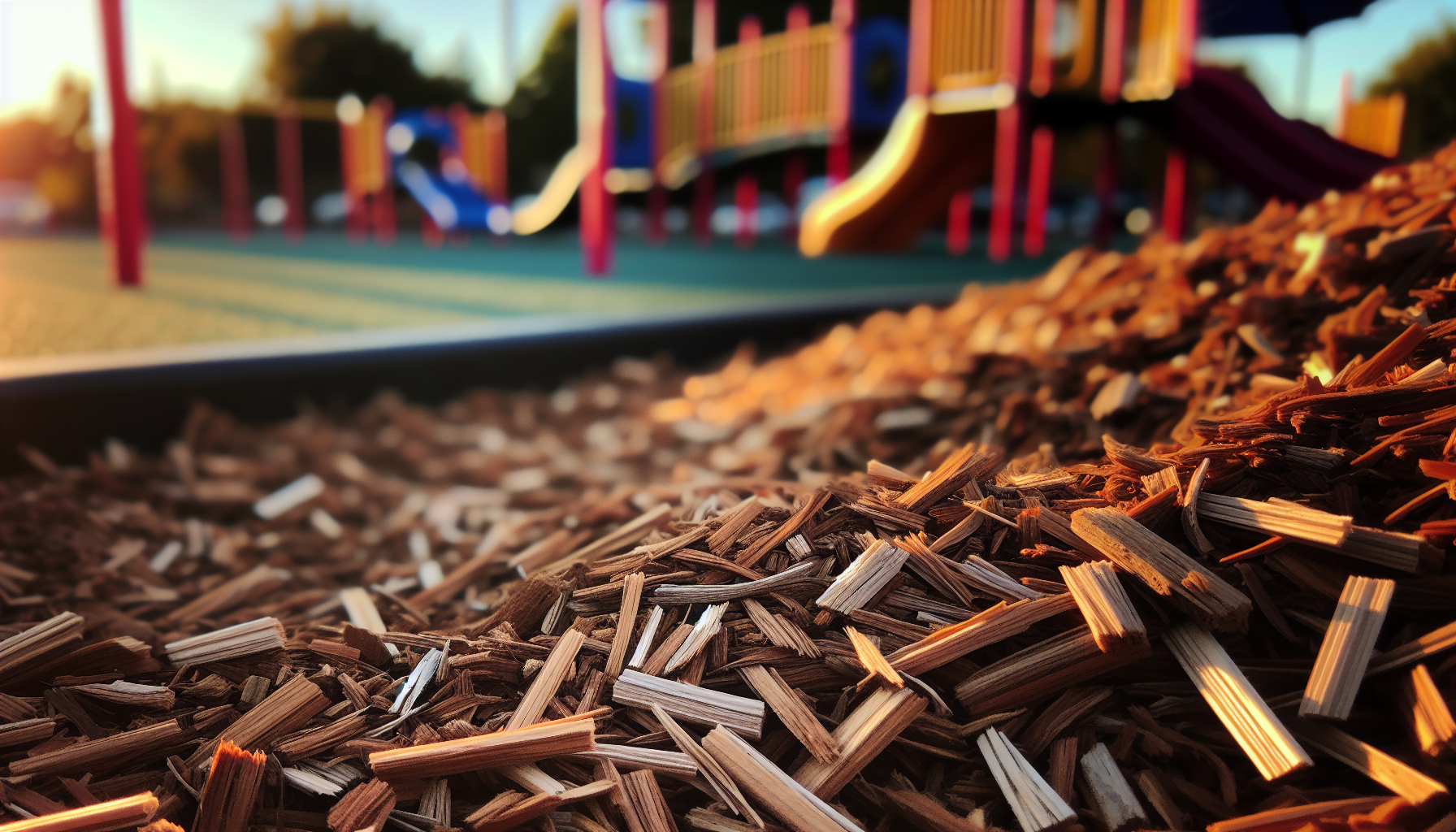
How much mulch do you need? (Calculations and example)
Use this formula to estimate volume of loose-fill material required:
- Cubic yards required = (Area in square feet × Depth in inches) / 324
The number 324 comes from converting inches to feet and cubic feet to cubic yards (12 × 27).
Example 1:
- Area = 600 sq ft (20 ft × 30 ft)
- Desired depth = 9 inches
- Cubic yards = (600 × 9) / 324 ≈ 16.67 yd³
Example 2:
- Area = 400 sq ft
- Desired depth = 6 inches
- Cubic yards = (400 × 6) / 324 ≈ 7.41 yd³
Always buy a little more than the calculation to accommodate settling and compaction — typically 10–20% extra.
Step-by-step: Installing and maintaining regular mulch safely
If you decide to use a wood-based mulch and you’re not dealing with high fall heights, follow careful installation and maintenance practices to improve safety and longevity.
Preparation
- Measure the playground area to calculate material needs.
- Remove existing surfacing, trash, and debris. Check for buried hazards.
- Grade and compact the base so water drains away from equipment.
- Consider edge restraints (timber, metal, stone) to contain mulch and prevent migration.
- Review manufacturer recommendations about placing geotextile fabric. Many playground professionals avoid non-porous plastic barriers; permeable geotextile fabric is sometimes used to reduce weed growth while allowing drainage.
Installation
- Purchase clean, untreated wood mulch or playground-grade EWF if available.
- Begin installing mulch and distribute to the target depth — use the formula and product guidance.
- Create a uniform surface, avoiding mounds and low spots; check depth at regular intervals.
- Keep mulch away from equipment posts and use appropriate separation where movement or moisture can collect.
- Rake the surface to eliminate hard-packed spots and to maintain cushioning.
Maintenance
- Inspect weekly/biweekly for foreign objects, animal waste, broken pieces, and compaction.
- Re-level and rake frequently to maintain an even cushion.
- Measure depth monthly and top up as needed. Loose-fill surfaces can lose 25–50% of depth over the first year depending on traffic.
- Replace the mulch every 1–3 years for landscape mulch; EWF may need topping more intermittently. Replace sooner if signs of rot, mold, or contamination appear.
- Winter management: remove any ice build-up, and check for water pooling and freeze-thaw compaction.
Safety inspections
Keep a log of inspections and actions taken. Document depth measurements and material additions. If part of an organization, assign responsibility and frequency and follow local code inspection schedules.
Alternatives you should consider
If safety, accessibility, and longevity are priorities, consider these alternatives. Each has trade-offs.
| Option | Pros | Cons | Best use |
|---|---|---|---|
| Engineered wood fiber (EWF) | Lower cost than poured surfaces; good impact attenuation when installed | Requires annual maintenance and topping; not inherently ADA-compliant | Schools, parks where wood aesthetic is desired and maintenance is available |
| Rubber mulch | Durable; good cushioning; drains well | Higher cost; heat retention; questions about chemical exposure | Playgrounds needing low-maintenance loose-fill |
| Poured-in-place rubber | Durable, accessible, predictable performance | High upfront cost; surface can get hot in sun | Public parks, ADA-compliant areas, playgrounds with high use |
| Rubber tiles | Accessible and replaceable | More expensive; edges can trip if poorly installed | School playgrounds, public playgrounds |
| Synthetic turf with padding | Low maintenance, accessible | High cost; eventual replacement needed | Multisport areas, high-use playgrounds |
| Sand / pea gravel | Low material cost | Compaction, maintenance, and ingestion risk | Limited use areas; not ideal for young children |
Liability and insurance considerations
If you manage a public or institutional playground, your insurance carrier and legal counsel likely expect compliance with recognized standards and reasonable maintenance practices.
- Noncompliant surfacing can increase liability exposure after an injury.
- Keep records of product documentation, installation, maintenance, and inspections.
- Follow manufacturer instructions and meet local regulatory requirements.
When regular mulch can be acceptable
You might choose regular mulch in these scenarios:
- Private backyards with low-height play equipment, limited fall heights, and adult supervision.
- Decorative buffer zones around play areas (not the primary fall zone).
- Short-term or temporary installations where you clearly limit use and manage risks.
If you use regular mulch, pick clean, untreated wood products, avoid dyed mulch, measure and maintain adequate depth, and add a firm accessible route to satisfy accessibility expectations where applicable.
When you should not use regular mulch
Avoid regular landscape mulch when:
- Equipment allows falls from heights that require certified impact attenuation.
- The playground is public, institutional (schools, daycare), or unsupervised.
- You must provide ADA-compliant surfacing or accessible routes for mobility devices.
- You want low-maintenance, long-lasting surfacing.
Decision checklist for you
Use this short checklist to decide whether to use regular mulch:
- What is the maximum fall height on the equipment?
- Is the playground public or private?
- Do you need ADA accessibility under equipment?
- Can you commit to regular maintenance and depth monitoring?
- Can you source untreated, clean mulch free of contaminants and dyes?
- Do you have budget for certified surfacing if required?
If you answer yes to needing public/institutional compliance, ADA access, or higher fall heights, opt for engineered or certified surfacing.
Final recommendation
You should treat regular landscape mulch cautiously for playground surfacing. For low-height, private play areas with active supervision, clean, untreated wood mulch installed to adequate depth and maintained carefully can be acceptable. For any public, school, or higher-fall playgrounds, you should use a tested and certified surfacing product such as engineered wood fiber (EWF), rubber mulch, or poured-in-place rubber that meets ASTM F1292 and other applicable standards.
If you decide to use a mulch-like wood product, choose engineered wood fiber specifically designed for playgrounds (with test documentation), follow installation and depth guidelines, maintain it rigorously, and add accessible routes as required. When in doubt, consult local code, a playground safety inspector, or the equipment manufacturer.
If you want, I can help you:
- Compare specific products available in your area;
- Calculate exactly how much material you need for your playground dimensions;
- Create a maintenance schedule checklist tailored to your site.
Which of these would be most helpful to you next?