? Are you trying to figure out the best way to mulch a playground so the surface is safe, attractive, and long‑lasting?

How Should I Mulch A Playground?
You want a playground surface that cushions falls, controls erosion, looks good, and meets safety and accessibility standards. Choosing the right mulch and installing it correctly will protect children, reduce maintenance, and keep your space usable for years.
Why mulching matters for playgrounds
Mulch reduces impact forces when children fall, preventing serious injuries and softening landings. It also manages drainage, controls weeds, and helps define play zones so equipment stays in good condition.
Key safety standards and guidelines
You should follow recognized standards like ASTM F1292 for impact attenuation and the CPSC Public Playground Safety Handbook for general safety recommendations. These documents set guidelines for appropriate depth, materials, and testing to reduce injury risk.
Types of playground mulch and how they compare
You’ll want to pick a mulch type based on safety, cost, maintenance, accessibility, and environmental concerns. Each option has distinct pros and cons depending on your site and how the space is used.
Engineered Wood Fiber (EWF)
Engineered wood fiber is processed wood specifically graded for playground safety. It provides excellent impact attenuation at appropriate depths and compacts less predictably than poured surfaces, but it’s widely used in parks and schools because it’s affordable and compliant when installed correctly.
Wood chips and shredded bark
Natural wood chips or shredded bark are an inexpensive option and provide a natural look. They can offer good cushioning if kept at recommended depths, but they decompose, migrate, and require regular topping and maintenance.
Rubber mulch (recycled and poured-in-place)
Rubber mulch—either loose shredded rubber or poured-in-place poured surfacing—provides consistent cushioning and longevity. It resists decomposition and requires less topping, though loose rubber may be more expensive initially and some communities have environmental or odor concerns.
Sand and pea gravel
Sand and pea gravel are popular in some settings because they are inexpensive and drain well. They’re less effective for high fall heights, migrate easily, and can present accessibility challenges for wheelchairs and strollers.
Unitary surfaces (poured rubber, tiles)
Poured‑in‑place rubber or interlocking rubber tiles give consistent, accessible surfaces and excellent impact attenuation with minimal maintenance. They are the most expensive option but offer accessibility compliance and long service life.
Comparison table of common playground surfaces
| Surface type | Safety (impact attenuation) | Maintenance | Accessibility | Cost | Notes |
|---|---|---|---|---|---|
| Engineered wood fiber (EWF) | Good when installed to depth | Moderate, requires topping | Challenging unless stabilized | Low–Moderate | Widely used, ASTM compliant if done right |
| Wood chips/shredded bark | Fair to good | High, decomposes/migrates | Not ADA-friendly | Low | Natural look, frequent replenishment |
| Loose rubber mulch | Good | Low–Moderate | Better than wood but some mobility issues | Moderate–High | Recycled option, weed/rain resistant |
| Poured rubber | Excellent | Low | Excellent (ADA-compliant) | High | Durable, consistent impact performance |
| Rubber tiles | Excellent | Low | Excellent | High | Replaceable sections, easy repairs |
| Sand/pea gravel | Poor–Fair | High, migrates | Poor | Low | Good drainage, not great for falls |

Determining the right depth for safety
You must match mulch depth to the playground’s critical fall height (the maximum height from which a child can fall). The right depth ensures impact attenuation protects children.
Understanding critical fall height (CFH)
Critical fall height is the height at which a surfacing material still meets impact attenuation standards. You can test materials to determine CFH, or use manufacturer charts which show required depths for specific fall heights. Always install to a depth that matches or exceeds the equipment’s highest fall point.
Typical depth recommendations by material
Most guidelines give depth ranges: EWF typically needs 9–12 inches for higher fall heights, wood chips about 9–12 inches, loose rubber often 6–12 inches depending on product, and poured rubber surfacing can perform with much shallower layers because the material is engineered. You should always check manufacturer or ASTM guidance for exact depths.
Example depth vs. fall height guidance (generalized)
| Material | Typical depth range | Suitable maximum CFH (approx.) |
|---|---|---|
| EWF | 6–12 in | Up to ~12 ft when compacted properly |
| Wood chips | 6–12 in | Up to ~8–12 ft depending on chip size |
| Loose rubber | 3–12 in | Varies by product; often up to ~12 ft |
| Poured rubber | 1–2 in (pad) | Up to 12+ ft depending on system |
How to calculate how much mulch you need
You’ll want a simple formula and a quick table so you can estimate material needs and cost before ordering.
The cubic yards formula
To calculate cubic yards required: Cubic yards = (Area in square feet × Depth in inches) / 324. This uses 27 cubic feet per cubic yard and converts inches to feet.
Example calculations for common play area sizes
| Area (sq ft) | Depth (in) | Cubic yards needed |
|---|---|---|
| 500 | 6 | (500×6)/324 ≈ 9.3 yd³ |
| 1,000 | 6 | (1000×6)/324 ≈ 18.5 yd³ |
| 1,500 | 9 | (1500×9)/324 ≈ 41.7 yd³ |
| 2,000 | 12 | (2000×12)/324 ≈ 74.1 yd³ |
Tips when ordering
Order 10–20% extra to account for settlement, compaction, and future top‑ups. If using bulk delivery, confirm that the supplier measures in cubic yards and can deliver the volume you need.
Step‑by‑step installation process
Following a good installation process will ensure safety, compliance, and longevity. This section covers preparation, base work, installing edging, adding mulch, and finishing touches.
Site preparation
Clear the area of debris, vegetation, and roots. You should also mark the play zone and identify drainage patterns so water won’t pool under play equipment.
Grade and base preparation
A compacted granular base may be required for some surfacing systems to improve drainage and stability. For loose mulch, ensure a level base free of large rocks and sharp objects and consider installing geotextile fabric to inhibit weeds and separation with soil.
Installing edging and containment
You’ll want edging to keep loose mulch contained and clearly mark the play area. Use wood timbers, plastic/metal edging, or concrete curbs, and anchor them securely so they won’t shift during play or mowing.
Laying fabric (optional)
A permeable geotextile fabric can prevent mixing with soil while still allowing drainage. Avoid impermeable liners that trap water; choose fabrics rated for playgrounds and install them under the mulch, cut around equipment footings.
Spreading and finishing mulch
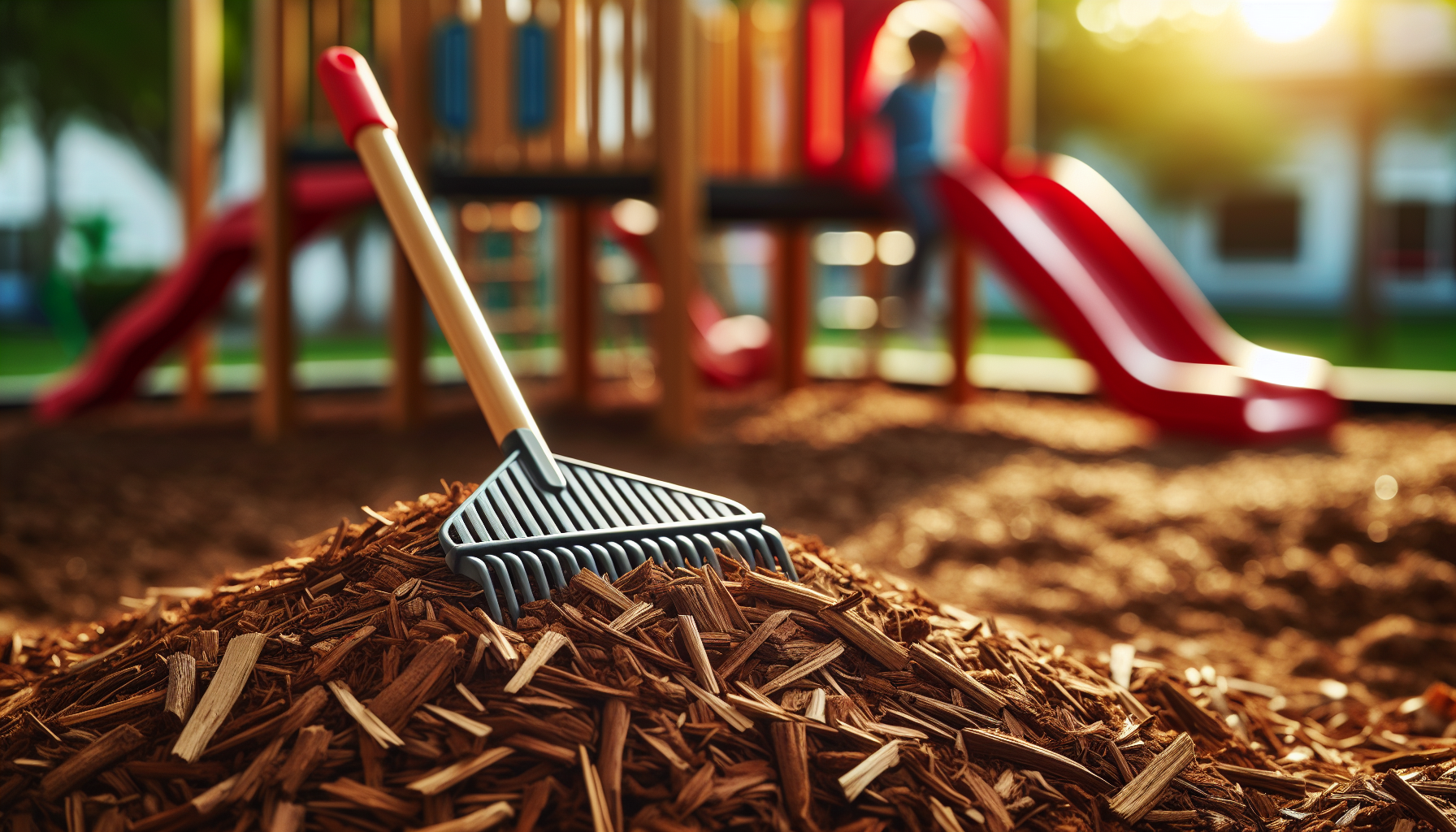
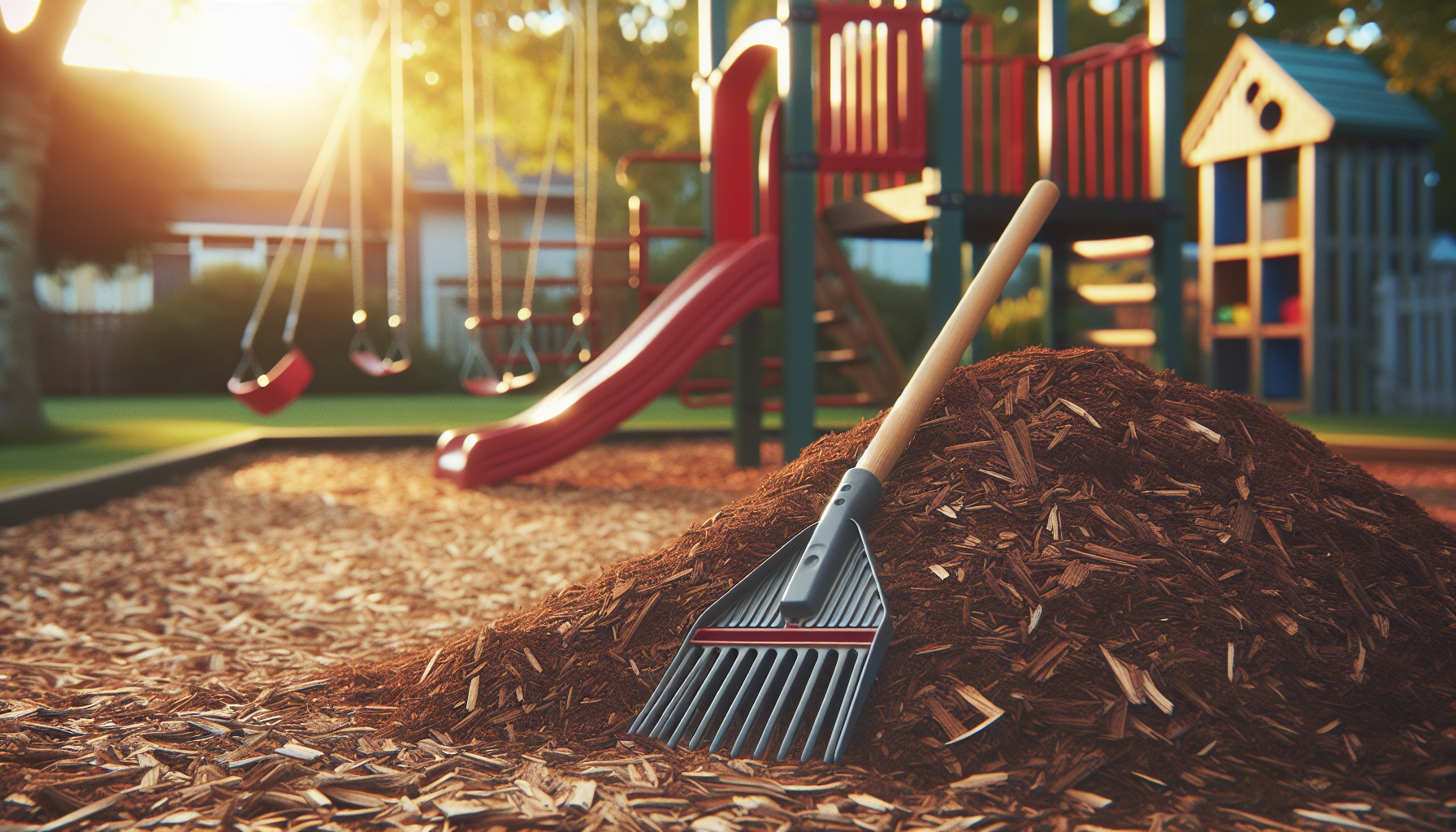
Distribute mulch evenly to the required depth, starting under equipment and working outward. Use rakes to achieve a uniform surface and check depths at multiple points, paying special attention to high fall zones like swings and slides.
Compaction and settling considerations
Some materials settle over time; EWF and wood chips will compress somewhat under foot traffic and weather. Plan for an initial compacting allowance and a follow‑up top‑up after a few weeks or months post‑installation.
Maintenance schedule and tips
A regular maintenance program keeps the surfacing effective and reduces liability risks. You should inspect, top up, clean, and repair as needed.
Routine inspections (daily/weekly)
Check for obvious hazards like broken equipment, exposed footings, foreign objects, and low‑depth areas under high use zones. Perform a quick visual check weekly in busy areas, and after storms or heavy use.
Monthly and quarterly tasks
Rake and redistribute mulch to maintain depth and even coverage, remove trash, and check edging for displacement. You should measure depth in critical zones quarterly and top up where necessary.
Annual tasks and major refresh
On an annual basis pull back mulch to inspect for buried hazards, replace contaminated material, and replenish mulch to the original specification. Consider a deep clean where you remove and replace degraded mulch every few years, depending on material life.
Recordkeeping
Keep a maintenance log with inspection dates, any findings and corrective actions, and the quantity and type of topping material added. This documentation helps manage liability and plan budgets.
Accessibility and ADA considerations
You need to ensure the surface supports access routes and compliant use for children or caregivers with mobility aids. Some loose surfaces won’t meet ADA standards for routes and access aisles.
Accessible routes and transfer systems
If you have play events or equipment that require ADA access, include stabilized pathways, ramps, or a unitary surface like poured rubber leading to accessible features. Provide transfer platforms where needed.
Stabilizers and grid systems
You can use grid stabilizers under loose surfaces to make them wheelchair accessible while preserving cushioning. These systems lock material in place and improve mobility without replacing the entire surface.
Environmental and health concerns
Think about the environmental footprint, leaching risks, and any potential health concerns for the community when selecting mulch.
Chemical leaching and runoff
Some rubber products have raised concerns over leachate and microplastics. If runoff enters nearby landscaping or storm drains, check local environmental guidance and consider more inert or natural products.
Allergies and dust
Wood dust or moldy natural mulch can aggravate allergies. You should pick materials and maintenance techniques (like keeping mulch dry and clean) that minimize risk.
Sourcing sustainable materials
Choose certified recycled rubber or sustainably sourced wood where possible. Look for suppliers who provide documentation of origin or sustainability certifications.
Costs and budgeting
Budget for initial installation, routine maintenance, and periodic replacement. Cost varies widely based on material type and whether you hire contractors.
Typical cost ranges (approximate)
- EWF and wood chips: Low initial cost, higher ongoing maintenance.
- Loose rubber mulch: Moderate to high initial cost, lower maintenance.
- Poured rubber and tiles: High upfront cost, low long‑term maintenance.
These are rough ranges; get multiple quotes for accurate budgeting.
Cost‑saving strategies
Do prep work yourself, buy mulch in bulk, schedule installation during shoulder seasons, and maintain regularly to extend replacement intervals. You can also phase upgrades—start with the highest risk zones.
Drainage and erosion control
Proper drainage prevents pooling and material washout. You’ll need to grade the site and, in some cases, install subsurface drains.
Grading the play area
Slope the site slightly away from equipment to encourage runoff. Avoid creating depressions where water can collect and saturate the mulch.
Perimeter and channel drains
On sites with heavy runoff, perimeter trenching or channel drains can be installed to keep water moving away from play areas. Combating erosion often saves more in mulch replacement than the cost of drainage improvements.
Dealing with pests, mold, and decomposition
Natural mulches can attract insects or show mold when wet. You’ll need monitoring and remediation strategies.
Pest prevention
Remove standing water, trim nearby vegetation, and keep mulch depth consistent to reduce sheltered pest habitats. If pests are a persistent problem, consider alternative materials or professional pest control.
Mold and fungal growth
Ensure drainage is adequate and avoid overwatering nearby landscaping. If mold shows up, remove contaminated mulch and replace it; do not use fungicides without guidance.
Removing and replacing old mulch
When mulch becomes contaminated, compacted, or no longer meets safety specs, you must remove and replace it properly.
When to replace
Replace mulch if impact attenuation fails testing, if decomposition has significantly reduced depth, or if there is contamination (e.g., bodily fluids, oil) that can’t be sanitized. Typical replacement intervals vary: natural mulch often needs full replacement every 2–5 years, rubber less often.
Safe removal process
Contain and remove old material carefully, dispose according to local regulations, and inspect underlying surfaces for problems. If you reuse some material for landscaping, ensure it’s not contaminated.
Inspections and testing for safety compliance
Formal testing confirms your surfacing meets impact attenuation standards, especially after installation or major repairs.
Instrumented impact attenuation testing
Hire a qualified tester to perform HIC (Head Injury Criterion) or other ASTM F1292 testing when required. This testing determines the actual critical fall height supported by the installed material.
When tests are required
Test after initial installation, after major top‑ups, or if suspecting the surface no longer meets specifications, or if regulatory bodies require verification. Keep test reports with your maintenance log.
Common problems and troubleshooting
Knowing symptoms and fixes helps you act quickly to keep playgrounds safe and usable.
Problem: Low depth in high use areas
High use areas like under swings or at slide exits often lose material. Solution: Routinely top up, consider high‑usage mats, or install a unitary surface in those zones.
Problem: Poor drainage and muddy spots
Standing water erodes material and creates unsafe surfaces. Solution: Regrade, add drainage channels, or switch to a more permeable base.
Problem: Material migration offsite
Wind, water, and traffic cause migration. Solution: Improve edging, compact edges, and replace with heavier or stabilized options.
DIY vs. hiring professionals
You can do a lot of work yourself, but professionals bring expertise in safety compliance and efficiency.
When to hire a pro
Hire professionals for complex grading, drainage, compliance testing, and when installing unitary surfaces. Also hire pros if you need to meet strict public or school district requirements.
DIY considerations
If you install mulch yourself, follow manufacturer depth charts precisely, use the right tools, and maintain documentation. You’ll save money but should be realistic about the time and effort needed.
Sample checklist before a new installation
This checklist helps you confirm key items prior to installation.
- Confirm area dimensions and equipment fall heights.
- Choose mulch type and confirm depth requirements.
- Order mulch with 10–20% overage.
- Prepare site: remove debris, grade, and install edging.
- Install geotextile if used and ensure drainage provisions are in place.
- Spread mulch to uniform depths and check at critical points.
- Record installation details and schedule inspection/testing as needed.
Frequently asked questions (brief)
These short answers address common concerns you may have while planning.
How often should I top up the mulch?
Top up loose mulch at least once or twice a year for high‑use areas, and measure depth quarterly. Frequency depends on material type and level of use.
Is rubber mulch safe for children?
Many rubber products meet impact standards and are widely used, but check local regulations and product documentation to address environmental or health concerns.
Can I put wood mulch around play equipment?
Yes, if you use properly sized engineered wood fiber or wood chips installed to the recommended depth and maintained to meet safety standards.
Final recommendations and next steps
You should select a surfacing solution that balances safety, accessibility, maintenance, cost, and environmental concerns. Start by noting your playground’s equipment fall heights, measuring the area, comparing material options, and making a plan for installation and ongoing maintenance.
Immediate actions you can take
Measure the play area and equipment fall heights, consult manufacturer or ASTM guidance for required depths, and get quotes from local suppliers and installers. Keep records and schedule regular inspections to ensure ongoing safety and compliance.
If you follow these guidelines, you’ll create a safer, more durable playground surface that protects children while fitting your site’s budget and maintenance capabilities.