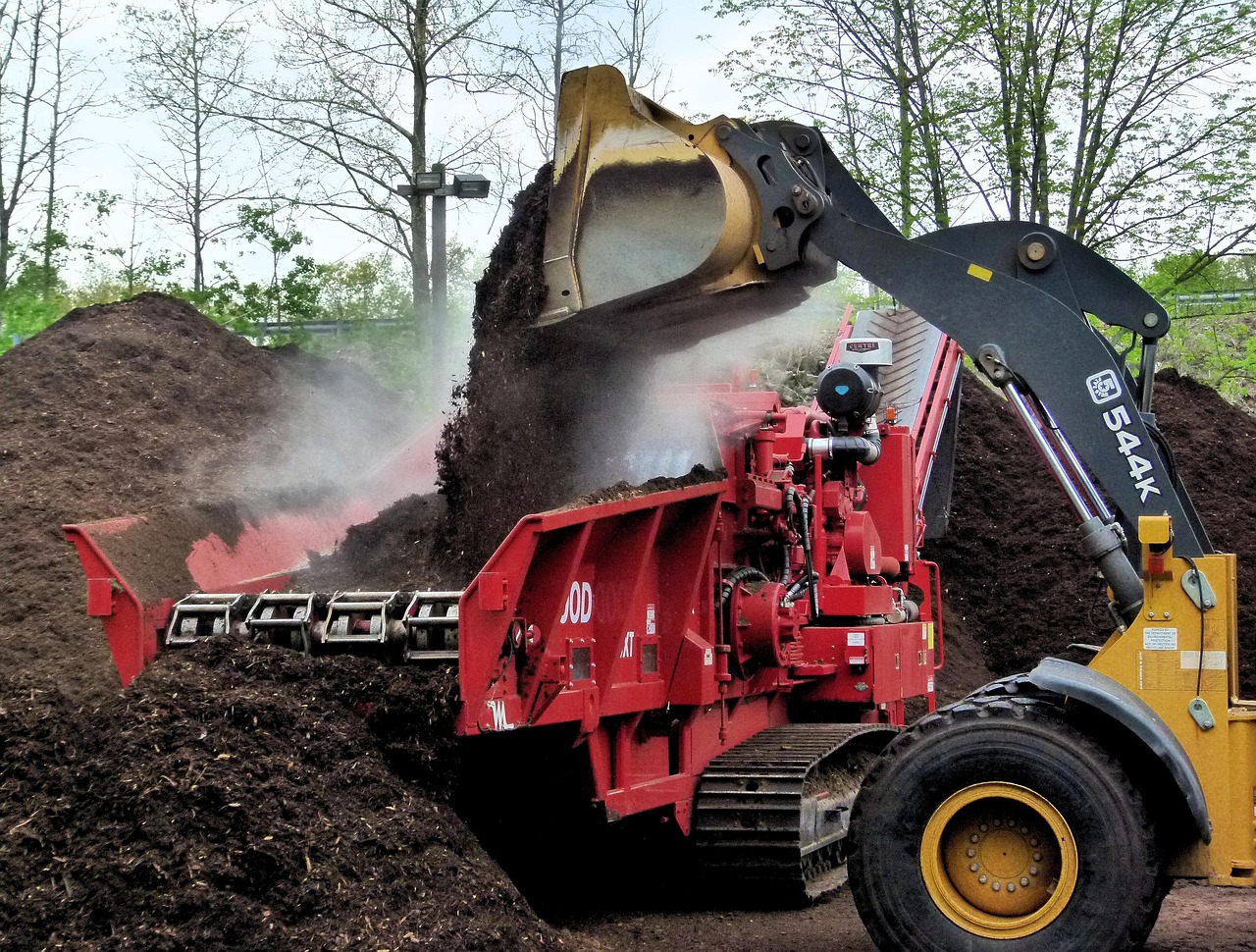

Are you trying to find rubber mulch for your playground and wondering where to look and what to expect?
Where Can I Find Rubber Mulch For The Playground?
You can find rubber mulch from several types of suppliers, both locally and online, and each source has pros and cons depending on your budget, installation needs, and safety requirements. This article walks you through the options, buying tips, installation basics, safety and environmental considerations, and how to calculate how much material you’ll need.
Why Choose Rubber Mulch for Your Playground?
Rubber mulch offers specific advantages compared with organic mulches and some other safety surfacing options. You’ll appreciate its long life, low maintenance, and excellent shock-absorbing properties when installed properly.
Rubber mulch is especially useful where you want to reduce maintenance, limit decomposition and insect problems, and maintain consistent fall protection over time. It resists decay, doesn’t wash away as easily as wood chips, and usually requires topping up less often.
Safety and Impact Attenuation
Rubber mulch is engineered to absorb impact energy and reduce the severity of falls, which is a primary reason many parents and facility managers choose it. You should look for products tested to accepted playground safety standards to ensure adequate protection.
Data and standards vary by product, so verify the product certification and recommended depths for achieving the fall height protection you need. Impact performance depends on depth, particle size, and how the material is maintained, so plan installation accordingly.
Durability and Maintenance
Rubber mulch does not rot or decompose like organic mulch, so you’ll be topping it up far less frequently. You also won’t be replacing it because of insect infestations or fungal breakdown as you would with wood chips.
Maintenance mostly involves occasional raking to redistribute material, checking edge containment, and topping up high-use areas. That makes it especially attractive for busy playgrounds, schools, or homes where you want lower ongoing upkeep.
Aesthetics and Color Options
Rubber mulch comes in a range of colors, from traditional black to green, red, brown, and bright playground-safe tones. You can choose a color that matches your equipment, landscaping, or school colors to make the area look neat and intentional.
Colors are achieved with pigments and coatings, so ask suppliers about colorfastness and UV stability if long-lasting appearance matters to you. Some colors may fade over many seasons, so consider warranty and pigment quality.
Environmental Considerations
Rubber mulch is often made from recycled tires, which is a positive reuse of material that would otherwise go to landfill or require energy-intensive disposal. Reusing tires reduces waste and can be part of a circular-economy approach.
However, you should weigh concerns about potential leaching of chemicals or volatile compounds and the local recycling regulations. Choosing products certified as low-emissions or tested for heavy metals and PAHs reduces environmental and health worries.

Types of Rubber Mulch You’ll Encounter
There are multiple formulations and styles of rubber mulch, and you should understand the differences so you can choose the right product for your needs. The main categories vary by source material, particle shape, and processing method.
Recycled Tire Crumb/Chips
Recycled tire rubber mulch is made from ground or shredded end-of-life tires. You’ll commonly find it sold as loose chips or shredded particles, and it’s usually the most economical option for large playgrounds.
Because the material reuses existing products, you’ll benefit from reduced waste and typically lower cost. Ask the supplier about any pre-cleaning, magnetic separation for metal, and dust control measures used during processing.
EPDM and Virgin Rubber Mulch
EPDM (ethylene propylene diene monomer) or other virgin rubber options are manufactured from virgin rubber formulations, often designed to be more consistent and lower in contaminants. These products tend to be more uniform in color and particle size and are favored where low emission or controlled material composition is required.
You’ll pay a premium for virgin or EPDM materials, but they can provide better appearance and potentially fewer concerns about unknown additives in recycled materials. Check for product-specific testing and certifications.
Colored vs Natural Black Mulch
Black recycled rubber is common and usually the cheapest option. Colored varieties are produced by adding pigment or coating particles and are available both in recycled and virgin forms.
Colors make the playground more visually appealing, but pigments can fade over time and may require periodic top-ups. Ask manufacturers about UV-stable pigments and warranties on color retention.
Loose Mulch vs Bonded/Engineered Rubber Surfacing
Loose rubber mulch is free-flowing and behaves similarly to wood mulch in installation and maintenance. Bonded rubber (or poured-in-place, PIP) and rubber tiles are different systems that provide a solid surface with high impact attenuation and accessibility.
If you want improved wheelchair access, low movement, and minimal displacement, consider bonded systems or tiles instead of loose rubber mulch. Those systems are typically installed by professionals and are more expensive up-front.
Where to Buy Rubber Mulch
You have many purchasing paths, and the right choice depends on how much you need, how quickly you need it, and whether you want installation services included. Below are the most common places to source playground rubber mulch.
Local Landscape Supply Centers and Nurseries
Local landscaping suppliers often carry bagged rubber mulch and sometimes bulk rubber mulch by the cubic yard. Buying local can save on delivery costs and lets you inspect the product before purchase.
If you need a moderate quantity, these suppliers are convenient and often work with landscapers who can handle installation. Call ahead to confirm color availability and bag sizes.
Home Improvement Stores and Big-Box Retailers
Retail chains like large home improvement stores sometimes stock bagged rubber mulch for DIY projects. This is a convenient option if you only need a few bags and want immediate pickup.
Be aware that these retailers may offer a limited selection of colors and types, and bulk pricing is usually better when sourced directly from specialized suppliers. Check online inventory and read product reviews before you buy.
Specialty Playground Surfacing Suppliers and Manufacturers
Manufacturers that specialize in playground surfacing offer products specifically tested for impact attenuation and accessibility. These suppliers often provide both loose rubber mulch and alternative systems like poured-in-place rubber and tiles.
Buying from a specialist gives you access to product certifications, technical guidance, and installation services. Expect higher prices but greater assurance about safety and long-term performance.
Online Marketplaces and Retailers
You can buy bagged rubber mulch from online marketplaces and retailer websites if you prefer home delivery. This is convenient for smaller projects and allows you to read customer feedback and compare multiple brands.
Shipping bulky items can add significant cost, so compare the delivered price for your quantity. For large quantities, it’s usually cheaper to buy local bulk material.
Municipal Recycling Centers and Tire Processors
Some local recycling centers or tire processors sell recycled rubber mulch in bulk, often at competitive prices. You’ll be supporting local recycling efforts and may find lower-cost material.
Quality and consistency vary, so inspect or request a sample and check for certification if safety is a priority. Make sure the supplier removes metal and fiber contaminants.
Landscape Contractors and Playground Installers
Contractors who install playground equipment frequently supply rubber mulch as part of a turnkey package, taking responsibility for site prep and surfacing. This is a good option when you want a professional installation with warranty.
It may cost more than buying material yourself, but you’ll receive installation expertise, correct depth placement, and post-install inspection for safety compliance.
DIY and Small-Scale Options
If you prefer a hands-on approach, you can purchase bagged mulch and install it yourself. This route is cost-effective for small yards and gives you control over placement.
Be sure you follow safety depth guidelines and use proper edging to contain the loose material. DIY installation is feasible if you have basic tools and the ability to move and rake the mulch.
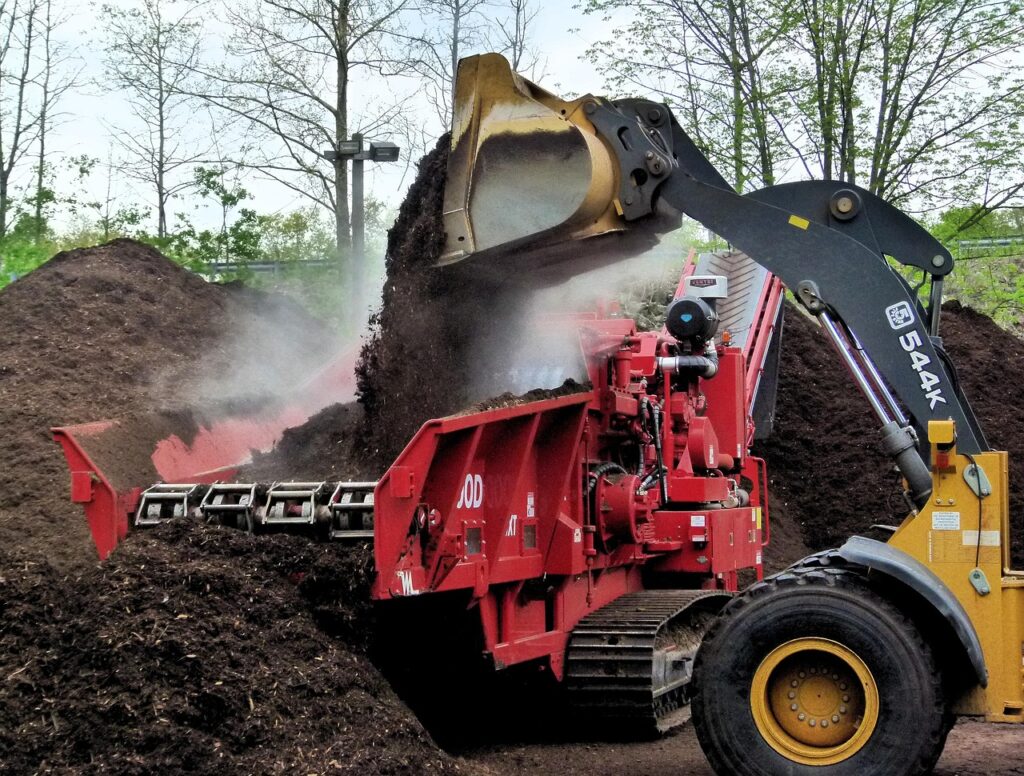
Supplier Comparison Table
This table summarizes the typical advantages and drawbacks of each source to help you decide where to buy.
| Supplier Type | Advantages | Drawbacks |
|---|---|---|
| Local landscape supply | Inspect product, local pickup, bulk options | Limited color range, variable certifications |
| Big-box retailers | Convenient, immediate pickup for small amounts | Higher per-unit price for bags, limited bulk |
| Specialty playground manufacturers | Tested products, professional support, certifications | Higher costs, often minimum order quantities |
| Online marketplaces | Wide selection, reviews, home delivery | Shipping costs for bulk, variable quality |
| Recycling centers/tire processors | Cost-effective, supports reuse | Inconsistent quality, may lack certifications |
| Contractors/installers | Turnkey solution, proper installation | Higher overall cost, less material control |
| DIY (bagged) | Cost control, flexible timing | Labor-intensive, risk of incorrect depth |
How to Choose the Right Product
Choosing rubber mulch involves balancing safety, cost, appearance, and environmental/safety concerns. You should define priorities before buying.
Decide whether you need a certified product for public playgrounds, a homeowner-grade product for a backyard play area, or a commercial-grade product for a school or municipal site. From there, check particle size, certifications, warranties, and whether the material is recycled or virgin.
Check Safety Certifications and Standards
For playground use, look for products tested for impact attenuation to ASTM F1292 and for accessibility to ASTM F1951 or other local ADA-equivalent guidelines. Certifications like IPEMA or manufacturer test reports provide third-party validation.
If your playground is public or part of a regulated system, confirm whether your local jurisdiction requires specific certifications. Ask suppliers for their test reports and any warranties tied to fall protection performance.
Particle Size and Depth Recommendations
Particle size affects drainage, compaction, and impact absorption. Smaller particles like crumb rubber settle differently than larger chips and may provide a different feel underfoot and in fall performance.
Manufacturers typically provide recommended depths to meet a given critical fall height. You should follow those recommendations and measure depth after settlement to ensure continued compliance.
Choosing Color and Coating
If color matters to you, ask about pigment stability and UV resistance. Some pigments and coatings are prone to fading, especially in harsh sunlight.
Also inquire about coating adhesives and whether the colorant affects heat retention or off-gassing. Choose products with warranties or positive longevity data if color is a priority.
Consider Accessibility and Mobility Needs
Loose-fill rubber mulch can be less accessible to wheelchairs and strollers unless installed at sufficient depth and combined with firm pathways or borders. If ADA compliance and mobility are critical, consider poured-in-place, bonded rubber, or rubber tiles, which provide firm, stable surfaces.
If you stick with loose mulch, plan for wheelchair paths and surfacing transitions that maintain safe and smooth access to play equipment.
How Much Rubber Mulch Will You Need?
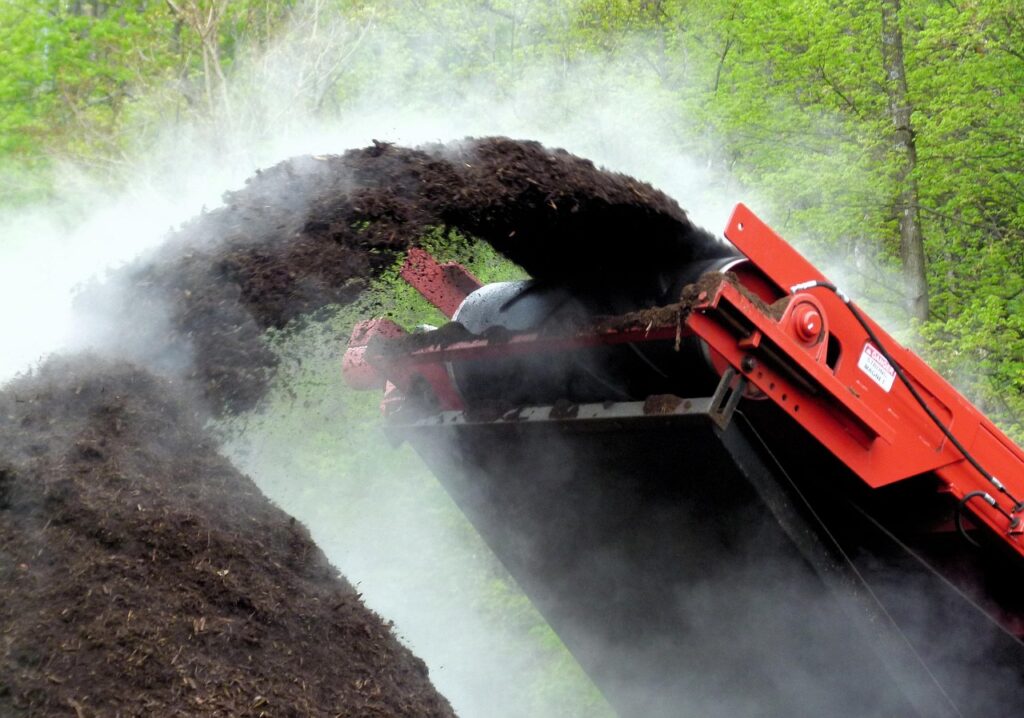
Calculating quantity is straightforward once you know your surface area and desired depth. Use standard volume math to convert area and depth into cubic yards or bags.
Formula: Cubic yards required = (Area in sq. ft. × Depth in feet) ÷ 27
For convenience, here are common examples and bag calculations. Assume a typical bag size is 2 cubic feet (check bag labeling, as sizes vary). If your bags are a different size, adjust the calculation.
Coverage Table: Cubic Yards and 2 cu ft Bags
This table helps you estimate material for typical areas at common depths. Use it as a starting point and round up for settlement and high-use areas.
| Area (sq ft) | Depth | Cubic Yards | 2 cu ft Bags (approx.) |
|---|---|---|---|
| 100 | 3 in (0.25 ft) | 0.93 yd³ | 12 bags |
| 100 | 6 in (0.5 ft) | 1.85 yd³ | 25 bags |
| 200 | 3 in | 1.85 yd³ | 25 bags |
| 200 | 6 in | 3.70 yd³ | 50 bags |
| 500 | 3 in | 4.63 yd³ | 63 bags |
| 500 | 6 in | 9.26 yd³ | 125 bags |
| 1000 | 6 in | 18.52 yd³ | 250 bags |
You should add roughly 10–20% extra material to account for settlement, compaction in high-traffic areas, and minor spills during installation. Many suppliers will recommend specific depth based on fall height requirements—check those recommendations.
Cost and Budgeting
Cost varies widely depending on product type (recycled vs virgin), color, bagged vs bulk purchase, and regional delivery costs. Plan your budget around several line items: material, delivery, edging, site prep, and installation labor if you’re hiring a pro.
Typical price indicators:
- Bagged rubber mulch (2 cu ft bags): Expect a wide range; $6–$20 per bag depending on brand and color. Bagged purchases are convenient but usually more expensive per unit.
- Bulk rubber mulch (per cubic yard): Prices vary by region and product quality; ballpark ranges might be $80–$250 per cubic yard for recycled materials, more for virgin or specialty colors. Bulk purchase often requires truck delivery and possibly a minimum order.
Other costs to include:
- Edging materials (to contain loose mulch)
- Weed barrier fabric if used (recommended under loose mulch)
- Delivery fees or tipping fees if purchasing bulk
- Labor if hiring installation contractors
Get multiple quotes and specify product details (color, recycled or virgin, particle size) so you’re comparing like for like. Ask about delivery logistics, drop location, and whether the supplier will offload bulk material with a dump truck or require additional equipment.
Installation Basics
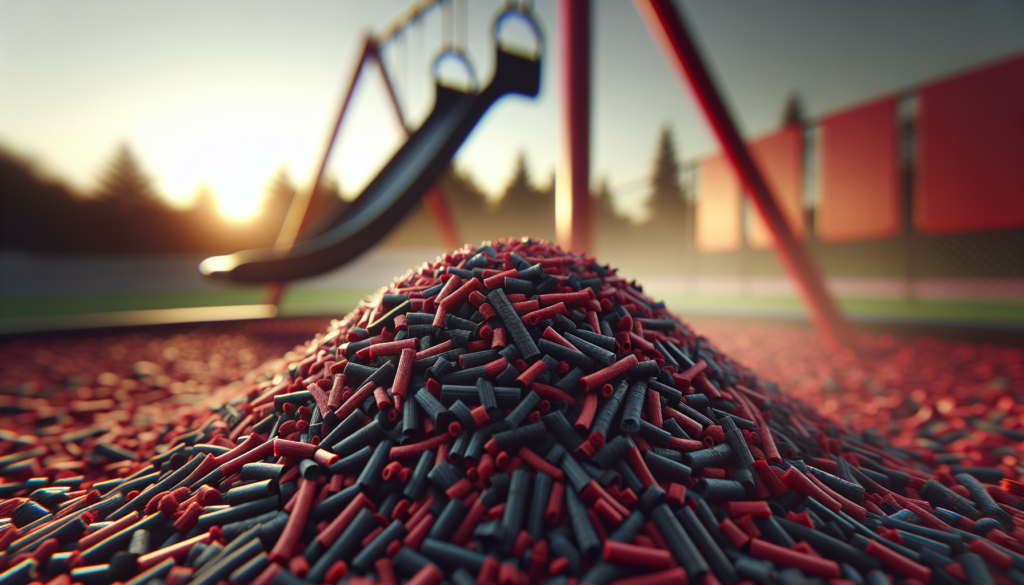
Correct installation affects safety and longevity. You can perform a DIY installation for small areas, but for large public playgrounds or where certification is required, use a professional installer.
General steps for loose rubber mulch installation:
- Site preparation: Remove existing surfacing and level the ground. Ensure the sub-grade is stable and slopes for drainage away from play equipment.
- Edge containment: Install a permanent edge such as timber, metal, or plastic edging to contain the loose material.
- Underlayment (optional): Lay a permeable weed barrier or geotextile fabric to help prevent weed growth while allowing drainage. Note: Some professionals avoid non-permeable barriers, so consult installer for recommended products.
- Deliver and distribute mulch: Spread material evenly to the recommended depth, starting deeper slightly to allow for settlement and compaction.
- Check depth and rake: Measure depth across the play area and rake to ensure even coverage.
- Final inspection: Verify critical fall height coverage and make adjustments.
For bonded systems or tiles, professional installation is typically required because those surfaces must meet specific bonding ratios and curing conditions.
Tools and Materials You’ll Need
You’ll need basic landscaping tools: wheelbarrow, rake, shovel, measuring tape, landscape fabric, edging materials, and a tamper or roller if required. If you order bagged mulch, factor in time and helpers to move many bags.
Wear gloves and dust masks if handling dusty rubber products, and consider protective eyewear when cutting fabric or shaping edges.
Maintenance Tips
Proper maintenance keeps your playground safe and looking good. It’s usually simpler than wood mulch upkeep, but still necessary.
Regular tasks:
- Check and rake high-use areas weekly or monthly to maintain even depth.
- Top up low spots after heavy use, storms, or over the seasons.
- Inspect edges and containment to prevent migration into lawns or paths.
- Remove visible contaminants like glass or sharp objects promptly.
- Check for compaction in high-traffic zones and fluff as needed.
A seasonal inspection and occasional replenishing every 1–3 years is typical for residential use; commercial playgrounds may require more frequent monitoring.
Safety, Health, and Environmental Issues
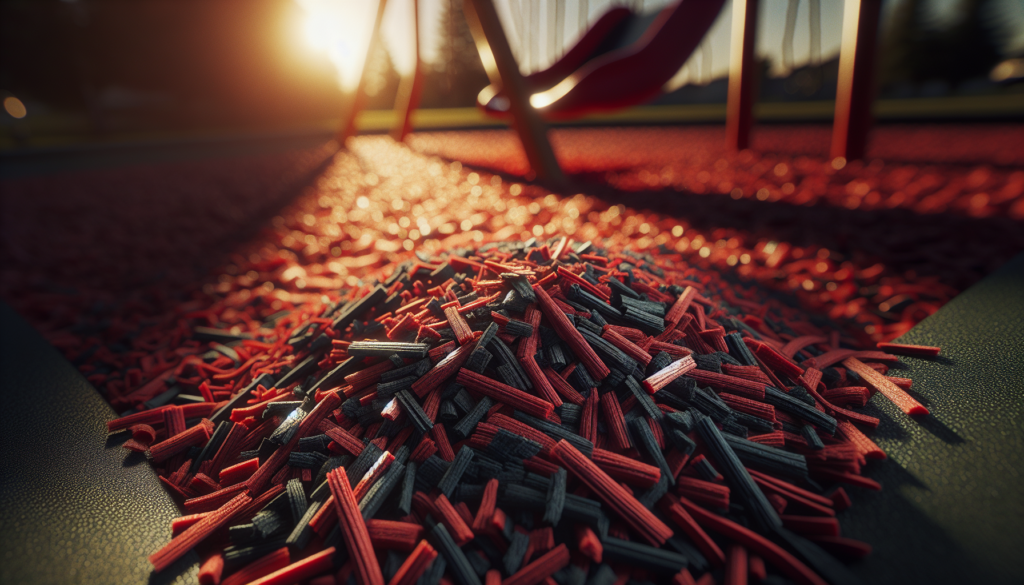
You should be aware of ongoing conversations about health and environmental impacts, especially for recycled-tire-based materials. Regulations and scientific understanding continue to evolve.
Common considerations:
- Off-gassing and smell: New rubber products sometimes emit odors that fade over time. If sensitive populations (very young children, people with respiratory issues) use the area, choose products with low VOC certifications.
- Chemical concerns: Some studies have looked at PAHs and heavy metals in recycled rubber. Reputable suppliers will provide testing data or certification showing compliance with safety thresholds.
- Heat retention: Dark rubber absorbs heat and can get hotter than wood mulch on sunny days. Consider shading, lighter colors, or cooling strategies if heat is a concern.
- Leaching and runoff: In some climates, there are concerns about chemicals washing into stormwater. Check local regulations and choose products with appropriate environmental test data if runoff is a worry.
If environmental impact is an important factor, consider asking suppliers for third-party lab testing results, MSDS sheets, or low-emission certifications.
Disposal and End-of-Life Options
Rubber mulch is long-lasting, but you’ll eventually replace it or remove it. Plan ahead for responsible disposal or recycling.
Options include:
- Return-to-supplier programs: Some manufacturers accept old material for recycling or reuse.
- Local recycling facilities: Tire processors may accept rubber mulch for reprocessing.
- Landfill: In some regions, disposal in a landfill may be the only practical option; check local rules and fees.
- Repurpose on site: Reuse the material in non-play areas like landscaping beds, provided it’s suitable for that use and consistent with local codes.
Keep documentation on material type and any recycling commitments to make future disposal easier.
Permits, Codes, and Insurance Considerations
Before buying and installing rubber mulch in a public or commercial playground, verify the applicable codes, permits, and insurance requirements. You’ll want to ensure compliance with safety standards and local regulations.
Common steps:
- Check municipal building and playground codes for surfacing requirements.
- Confirm whether your park or school district requires tested products and certified installer documentation.
- Consult your insurance provider if you run a commercial facility, as surfacing type and installation practices can affect liability coverage.
Retain installation records, product certification, and maintenance logs to demonstrate compliance if asked.
Frequently Asked Questions (FAQs)
Here are some practical answers to common concerns you’ll likely have.
Q: Is rubber mulch safe for kids? A: Rubber mulch can be safe when you choose a certified product, install it to the recommended depth, and maintain it properly. Look for impact attenuation testing and product certifications.
Q: How deep should rubber mulch be for playground safety? A: Depth recommendations vary by product and desired critical fall height, but many manufacturers recommend around 6 inches for common residential applications and more for higher fall heights. Follow manufacturer recommendations and local regulations.
Q: Will rubber mulch attract pests or insects? A: Rubber mulch does not rot and is generally unattractive to pests that prefer organic material, so you’ll usually see fewer insect problems than with wood mulch.
Q: Can you mix rubber mulch with wood mulch? A: It’s not recommended because mixed materials settle differently and can negatively affect impact performance and maintenance. Keep surfacing materials consistent across the play area.
Q: How often will I need to top up rubber mulch? A: Frequency depends on usage, but many residential installations need top-ups every 1–3 years, while heavily used commercial playgrounds may need more frequent replenishment.
Q: Is rubber mulch cheaper than poured rubber or tiles? A: Loose rubber mulch usually has a lower upfront material cost than poured-in-place and rubber tile systems, but bonded or tile systems can offer better accessibility and lower long-term movement and maintenance.
Final Buying Checklist
Before you buy, use this checklist to ensure you get a product that fits your needs:
- Confirm the area to be covered and calculate the required cubic yards.
- Decide on recycled vs virgin materials based on budget and health/environment priorities.
- Request product test reports for ASTM F1292 (impact attenuation) and any ADA/ASTM F1951 accessibility testing if needed.
- Ask about pigment stability and UV resistance for colored mulch.
- Request sample materials or inspect bagged product where possible.
- Get written quotes that include delivery, offload, and installation if applicable.
- Plan for edging materials and weed barrier if you’ll use them.
- Check local rules and certification requirements for public playgrounds.
- Allow extra material for settlement and high-use areas.
Closing Thoughts
Finding rubber mulch for your playground is straightforward once you understand the types, sourcing options, safety requirements, and installation needs. You’ll save time and money by deciding up front whether you need certified surfacing, professional installation, or a DIY approach for a smaller area.
Take your time to compare suppliers, request test documentation, and calculate volumes carefully so your playground offers safe, durable, and attractive surfacing for years to come. If you want, you can tell me your playground dimensions, desired depth, and whether you prefer recycled or virgin material, and I’ll help estimate quantities and suggest likely supplier types.